4 0 2

402 days. 402 (plus or minus… mostly minus) posts.

Day 107: What to Pack

My best friend from graduate school is coming to visit me from New York tomorrow and she asked me what to pack. Rather than send her a list broken up between eight separate text messages (with some “xoxoxo’s” peppered in for good measure), I’m sending it to her blog-style.

Stuff to Pack*

1. Your warmest coat. Unlike everywhere else in the country, it’s the middle of winter where I live. In fact, it’s been winter the entire time I’ve had this blog. The. Entire. Time. I’m both giggling and crying as I write this.

2. Wine. I tried to get some in preparation for your arrival, but I left my ID in my other coat and the guy at Kowalski’s wouldn’t sell me any without it. My incredulous and wide-eyed, “But I’m thirty!” didn’t phase him one bit.

3. Yoga pants. Obviously we’re going to dress up like we’re going to yoga, whether or not we actually go. We can drink the wine you’re bringing instead.

4. Dancing shoes (sneakers). I’ve compiled a long list of all the dance nights happening around town throughout the week. If we plan on going to all of them, we’ll make it to at least one. I’m itching to do the Roger Rabbit on a Wednesday.

5. Skim milk. This is a soy milk household. (Just kidding; I already picked up some skim. But I do think it’s gross, so you’re going to have to drink the entire carton by yourself.)

6. Those magical heat-emitting hand-warmer thingies you can put in your pockets. See number 1.

That’s pretty much it. I have towels and Girl Scout cookies for you.

See you at the airport!

*This list can be adapted for anyone visiting the Midwest in March.
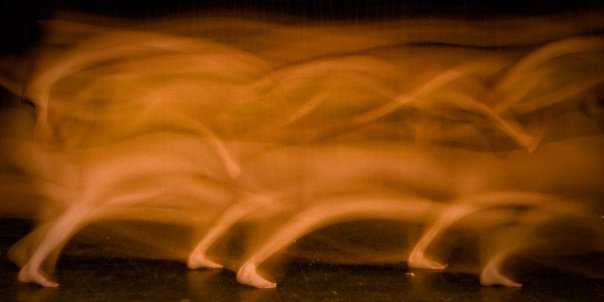
Dancing

That’s the two of us, running. Photo by the very talented Andrew Ippolito.
Day 106: Tread Softly

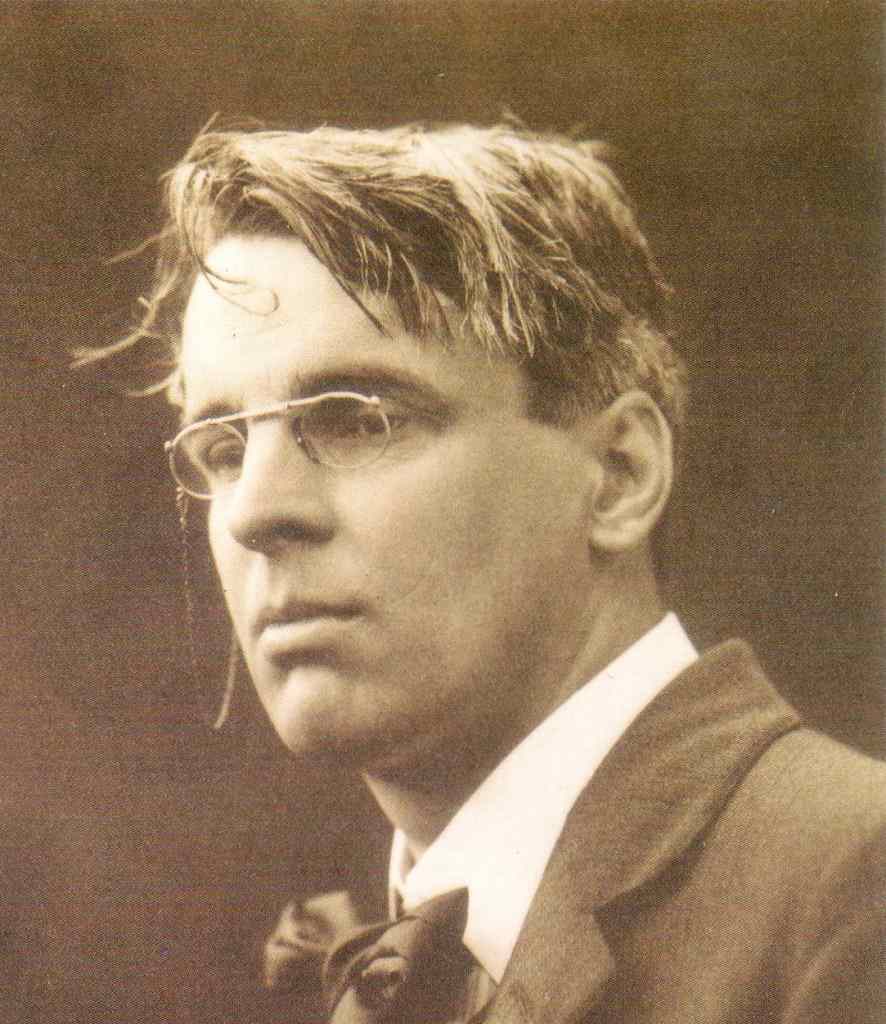
On this grey and quiet Sunday, I’m looking back over Sir Ken Robinson’s TED Talks and would like to share the full poem he references in “Bring on the learning revolution!” It’s lovely.

He Wishes For The Cloths Of Heaven
By William Butler Yeats

Had I the heavens’ embroidered cloths,
Enwrought with golden and silver light,
The blue and the dim and the dark cloths
Of night and light and the half-light,
I would spread the cloths under your feet:
But I, being poor, have only my dreams;
I have spread my dreams under your feet;
Tread softly because you tread on my dreams.

W. B. Yeats

Day 105: Empowering Kids

After yesterday’s post about education and creativity a la Sir Ken Robinson, my mom clued me into this really cool program that provides free weekly dance classes to kids.

Everybody Dance Now! was founded by by 14-year-old Jackie Rotman in 2005, in an effort to bring dance to kids who couldn’t afford expensive studio classes in Santa Barbara, California.

Seven years later, she has expanded Everybody Dance Now! into eleven cities across the county. In each city, the program is directed by local high school and college students. They mobilize teachers, connect with schools and organizations, and bring empowering and fun dance classes to students who may not otherwise have access to dance instruction.

I love this program. Aside from the incredible educational and brain-health benefits of dance (see Ken Robinson’s 2006 TED Talk), teaching kids to dance helps them develop confidence, self esteem, respect for their bodies, and appreciation for all of the different cultures of people who inhabit this planet.

And the program is run by youth. Amazing.

Chicago Public Media station WBEZ interviewed the young Chicago coordinators yesterday. You can listen to it below (to get straight to the interview, you may want to start about one minute in).

Day 104: Weekend Watching

Sir Ken Robinson is a creativity expert, an author and an international advisor on arts and education. While you’re juggling ballet classes, naps, farmer’s markets, shows, errands and absolutely nothing this weekend, get comfy in your favorite chair and watch his presentations from the 2006 and 2010 TED Talks. You’ll be so glad you did.

He makes a compelling and humorous case for an education revolution—a new way of thinking about learning that exposes and nurtures children’s natural talents, rather than squishing them into linear and not terribly creative systems.

Without innovative children, we will lack innovative adults. And without innovative adults, our species is sort of screwed.

TED 2006: Do schools kill creativity? 

“We have to rethink the fundamental principles on which we’re educating our children. There was a wonderful quote by Jonas Salk, who said, ‘If all the insects were to disappear from the earth, within 50 years all life on earth would end. If all human beings disappeared from the earth, within 50 years all forms of life would flourish.’ And he’s right.”


TED 2010: Bring on the learning revolution!

“…education, in a way, dislocates very many people from their natural talents. And human resources are like natural resources; they’re often buried deep, you have to go looking for them, they’re not just lying around on the surface. You have to create the circumstances where they show themselves.”

Day 103: Vocal Repetition

There’s just something about vocal repetition—saying something over and over again until the meaning changes form; until the words morph into something else and unfamiliar, and then become physicalized.

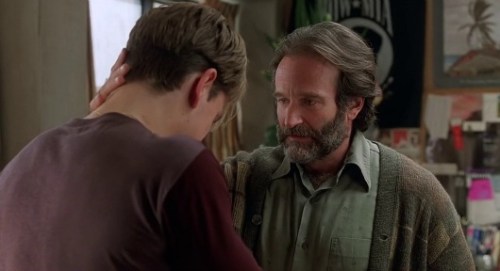
Remember Good Will Hunting? When Sean (Robin Williams) tells Will (Matt Damon) that his past isn’t his fault? Sean pointedly repeats, “It’s not your fault,” over and over until Will breaks down into tears and grasps Sean in a tight hug.

The actual language is more powerful than the sound in this case, but it’s still a good example of a physical reaction.

If you don’t know what I’m talking about, you should probably Netflix Good Will Hunting. Or watch the “It’s not your fault” clip.

good-will-hunting-its-not-your-fault

In my yoga class this evening, we repetitively OM-ed. We chanted ahhhhh-ooooooooh-mmmmm, over and over and over.

I spent the first few rounds wincing and feeling sorry for the pour souls who couldn’t hear themselves OM-ing so wretchedly off-key. Then, I wondered if I was the poor soul so wretchedly off-key, because it was kind of hard to tell. And then five or six OMs in, our class perfectly hit the pitch of the opening theme song to Battlestar Galactica (it was seriously dead-on) and I got the OM-ing giggles.

For the next few OMs, I tried to settle down and get serious. My “ahhhh”s sounded suspiciously like “ahh-hah-hah”s, and I  really wanted to invest in the experience instead of picturing Caprica City and sleek cylon fighters.

Eventually—and I’m not sure exactly when—all my wincing, giggling and cylon fighter-picturing faded away. I became enveloped in the sound of OM and experienced it in my body instead of in my head. I felt the sound vibrate around my skin, inside my skull, in my chest and my throat, and through my pressed-together hands. For lack of a more articulate way to say it, it was really cool.

When our instructor gently interrupted us, I had no clear concept of how long we’d been OM-ing and had to climb my way back to the surface to open my eyes and begin moving.

Although we don’t often think about it (let alone remember to experience it), sound is physical. In order to make noise, the tiniest vibrations of our vocal chords reverberate inside and outside of us. Weeding through the discomfort to actually experience the sounds we make is a very worthwhile endeavor. I’m sure Sean and Will would agree.